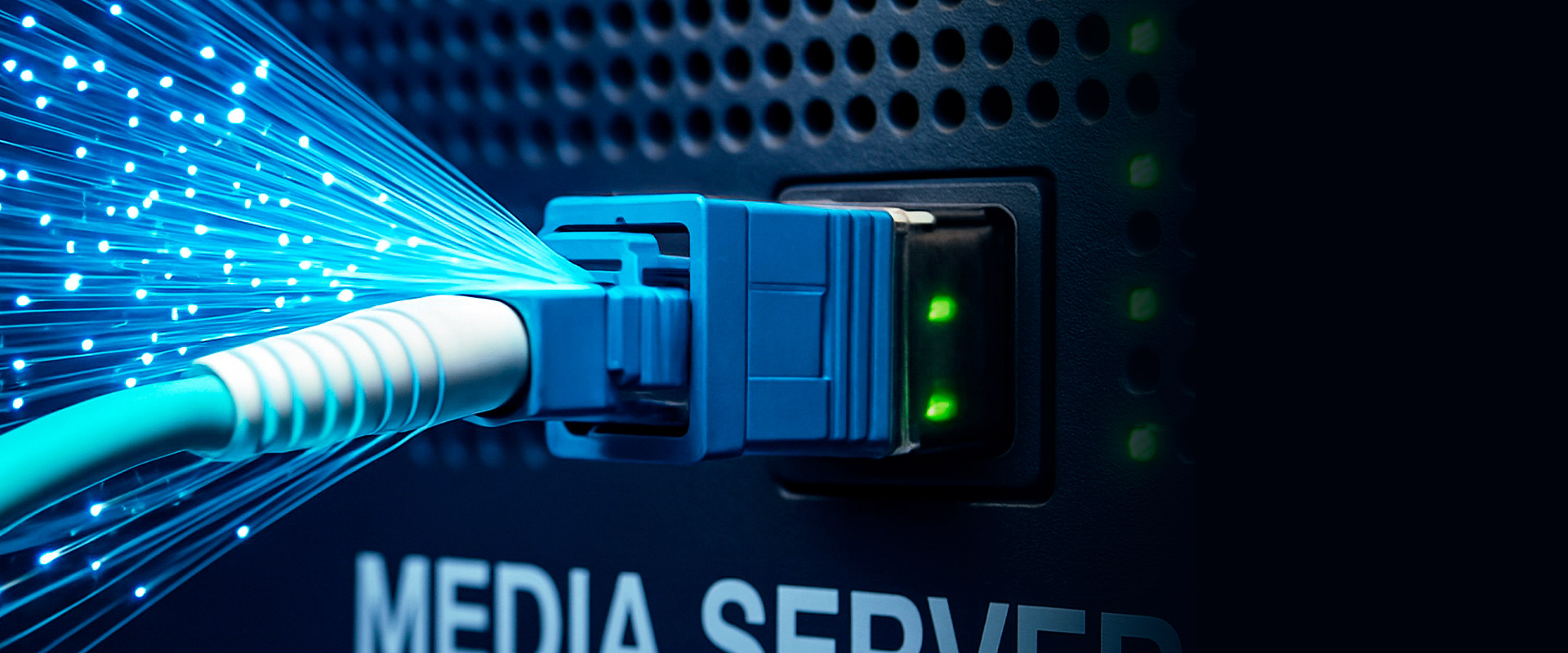
Fiber Optic
Copper or Fiber Optic? A Practical Guide to Choosing the Right Network Infrastructure
When it comes to designing a network infrastructure, one of the most important — and most debated — decisions is the choice of transmission medium: copper or fiber optic?
Both technologies offer clear advantages, but neither is universally superior. The key is understanding the specific needs of each environment and choosing based on variables such as distance, capacity, operating conditions, and scalability.
This guide provides the key criteria to make an informed decision aligned with your network's real requirements.
What Is the Difference Between Copper and Fiber Optic?
Before comparing, it is essential to understand how each technology works within a structured cabling infrastructure.
Copper Cabling: Efficiency and Versatility
Copper cabling transmits data through electrical signals and is the foundation of U/UTP, F/UTP, and S/FTP cables in categories such as Cat 5e, Cat 6, and Cat 6A — widely used in LAN networks, corporate and educational environments, and video surveillance systems.
One of its greatest advantages is its ability to transmit power through PoE (Power over Ethernet), enabling devices such as IP cameras, VoIP phones, and Wi-Fi access points to be powered from a single cable. This includes high-power applications such as PoE++ (IEEE 802.3bt), where thermal dissipation and correct cable selection are critical factors.
Fiber Optic: Superior Speed and Range
Fiber optic transmits data through light pulses, enabling higher speeds and longer distances without signal degradation.
It is also highly immune to electromagnetic interference (EMI), making it the ideal choice for industrial environments or high-demand installations.
When Should You Choose Copper Cabling?
Medium and High-Density LAN Networks
Copper remains the most efficient solution for horizontal distribution within buildings. Cat 6A cables cables support speeds of up to 10 Gbps over distances of up to 100 meters, while Cat 6 can reach the same speed over shorter distances — approximately 55 meters. Both options cover the majority of needs in offices, hospitals, and educational institutions.
Projects Requiring PoE
If you need to power devices such as security cameras, Wi-Fi access points, or IP phones, copper is indispensable. Fiber does not transmit power, which limits its use in these scenarios.
Optimized Budgets Without Sacrificing Performance
For short distances and standard requirements, copper offers an excellent cost-benefit ratio, with simpler installation and lower initial investment.
Practical Example
A hospital that needs to connect clinical workstations, IP cameras, and telephony across multiple floors can rely on Cat 6A cabling to ensure performance, organization, and operational continuity with PoE support.
When Should You Choose Fiber Optic?
Long-Distance Links
When the distance exceeds 100 meters, fiber optic is typically the most efficient and recommended option, particularly for maintaining performance and simplicity in network design. It is ideal for university campuses, industrial parks, or inter-building connections.
Environments with High Electromagnetic Interference
In factories or industrial facilities with constant electrical noise, fiber optic ensures signal integrity.
Backbone and Trunk Connections
Even in networks where copper predominates, fiber is often the best option for the backbone, connecting floors, racks, or buildings with high performance.
Practical Example
A university campus can use fiber optic in the backbone to connect buildings, while deploying Cat 6A cabling for internal distribution and end devices.
Hybrid Architecture: The Best of Both Worlds
In most enterprise network infrastructure projects, the best solution is not choosing between copper or fiber — it is combining them.
A hybrid architecture enables:
- Fiber optic for long-distance, high-speed trunk links
- Cat 6 or Cat 6A copper for horizontal distribution, end devices, and PoE support
This model is common in data centers, healthcare facilities, smart buildings, and corporate headquarters, where performance, flexibility, and efficiency are all required.
How to Make the Right Decision for Your Project
Before defining the transmission medium, ask yourself these key questions:
What is the distance between connection points? If it exceeds 100 meters, fiber is necessary. If it falls within that range, Cat 6 or Cat 6A copper is sufficient.
Do you need to power devices through the network? If the answer is yes, copper with PoE support is essential.
Does the environment have high electromagnetic interference? In heavy industry or complex electrical environments, fiber optic protects signal integrity.
What is the available budget? Copper offers excellent performance at a lower cost. Fiber may involve higher costs for active electronics and termination, although the cable itself can be competitively priced depending on the solution type.
How much does the network need to scale in the future? Cat 6A supports multigigabit applications (2.5G/5G/10GBASE-T), essential for Wi-Fi 6/7 networks, making it a long-term investment even for projects that do not require 10 Gigabits today.
Conclusion: The Right Infrastructure Exists — Choosing Well Means Designing for the Future
There is no single answer. Copper structured cabling and fiber optic are complementary technologies, and the right decision depends on how they are integrated within a well-designed network strategy.
An informed choice not only improves current performance, but also ensures scalability, operational continuity, and long-term efficiency.
Ready to design your network infrastructure?
At Nexxt Infrastructure, we offer 100% pure copper structured cabling solutions — Cat 5e, Cat 6, and Cat 6A — designed to adapt to different environments and levels of demand.
From smart buildings to data centers, we help you build a reliable, organized network ready to grow.
Contact us and one of our specialists will help you design the right infrastructure for your project.